The Catholic Church in Ghana has formally entered the ongoing legal battle over religious rights in schools by filing an amicus curiae (friend of the court) brief in the landmark case involving Wesley Girls’ Senior High School now before the Supreme Court of Ghana.
The intervention by the National Catholic Secretariat marks a significant moment in the national debate over the delicate balance between religious freedom and the identity of faith-based schools.
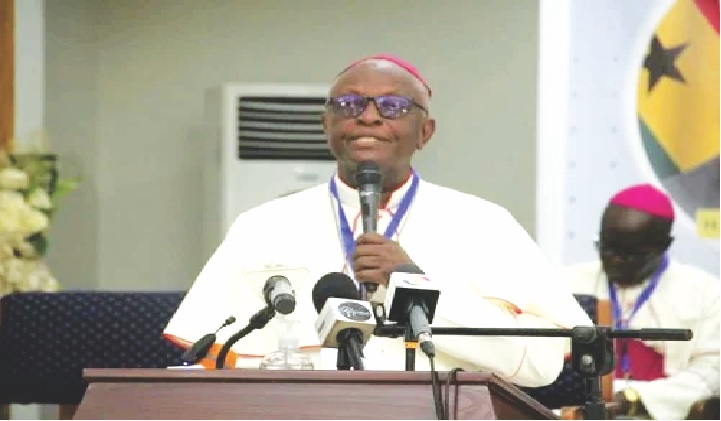
The affidavit supporting the Catholic Church’s submission was sworn by Most Rev. Joseph Kwaku Afrifah-Agyekum, Bishop of Koforidua and the Episcopal Bishop of the Ghana Catholic Bishops’ Conference responsible for education.
The Church says it entered the case to assist the court in addressing complex constitutional questions about religious liberty, institutional rights and educational autonomy.
The Case Before the Court
The suit was filed by private legal practitioner Shafic Osman, who is asking the Supreme Court to declare that certain policies at Wesley Girls violate provisions of the 1992 Constitution guaranteeing freedom of religion and protection from discrimination.
Mr. Osman argues that Muslim students at the Methodist-founded school have been prevented from observing Islamic practices such as:
Wearing the hijab
Fasting during Ramadan
Observing other religious rites
According to the plaintiff, these restrictions amount to unconstitutional discrimination and infringement of religious freedom.
The defendants in the case include:
The Board of Governors of Wesley Girls’ SHS
The Ghana Education Service
The Office of the Attorney General of Ghana
The Attorney-General has defended the school, arguing that institutions founded by religious bodies are entitled to preserve their denominational identity and traditions.
Why the Catholic Church Is Involved
In its brief, the Catholic Church argues that mission schools were originally established by religious bodies, often with their own resources, to combine education with religious formation.
The Church maintains that compelling such schools to abandon their religious character could amount to a violation of the fundamental rights of religious institutions themselves, including freedom of association and religious expression.
The Church also notes that Ghana’s educational system historically developed through a partnership between government and mission schools, not through state acquisition of those institutions.
Constitutional Questions
At the heart of the case is a crucial constitutional question:
Can students demand the unrestricted practice of their religion within a school founded to promote a particular faith?
The plaintiff relies on constitutional provisions guaranteeing:
Freedom of religion
Equality before the law
Protection from discrimination.
But mission schools argue that these rights must be balanced with the rights of religious organisations to maintain their identity and ethos.
Legal experts say the ruling could redefine the relationship between religious freedom and faith-based education in Ghana.
A Landmark Case
The Supreme Court has already permitted civil society organisations to file submissions as friends of the court, reflecting the national importance of the issue.
Observers say the eventual judgment could shape religious accommodation policies in schools across the country for decades.
For many Ghanaians, the case raises a fundamental question:
How should a diverse, multi-faith nation balance constitutional rights with the historic role of mission schools in education?
The answer may soon come from the nation’s highest court.