Mr. Attorney-General, Please Are You Aware of “Act 995”?

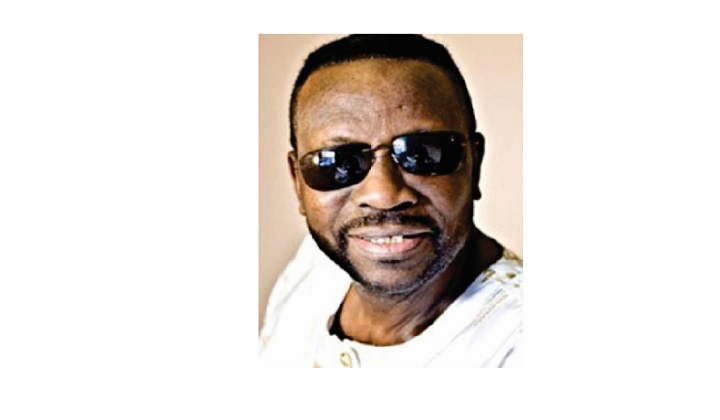
By Cameron Duodu
Veteran journalist Cameron Duodu questions the Attorney-General’s commitment to enforcing Ghana’s anti-galamsey laws and calls for transparency in the application of Act 995.
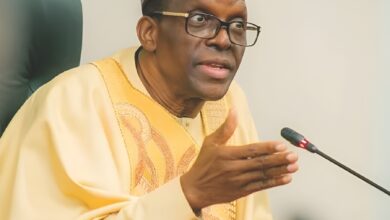
It is not a very pleasant question to ask the “learned” Attorney-General of the Republic. But since that learned personage is responsible for ensuring that the Government enforces the laws by which it rules us, we are sometimes compelled to pose uncomfortable questions.
Our former President, Nana Addo Dankwa Akufo-Addo, once suffered public embarrassment when he admitted that he did not know whether the Chinesegalamsey “queenpin”, Aisha Huang, had actually been deported from Ghana before reappearing to be rearrested. The embarrassment was compounded by the close professional relationship between the President and his Attorney-General, who had previously worked in the President’s law chambers. Why, then, was his “own man” not keeping him properly briefed on such a sensitive legal matter?
The current Attorney-General is also in a position to save his head of state from similar embarrassment, having served under President John Dramani Mahama during his previous tenure. Such a man would be expected to pay close attention to what President Mahama has been saying about the national problem that has dominated headlines and public discourse since his return to power — illegal mining, or galamsey.
So widespread has the problem become that the President recently convened a meeting of all ministers and stakeholders involved in the fight against galamsey to review strategies and discuss the way forward. A great deal of talk took place at that meeting. Many promises were made about how effective the “new measures” of the Mahama Government would be in defeating galamsey. Yet, these measures appeared to be little more than “old wine in new bottles”. Like its predecessor, this Government seemed overly reliant on “word power”.
Then came a test case — one that would reveal how seriously the Government truly intends to tackle galamsey. A so-called galamsey “kingpin” was arrested and charged with illegal mining. Given that past arrests of this nature had done little to deter the menace, public attention immediately focused on how the prosecution would proceed.
At first, the Government appeared resolute. Prosecutors demanded huge sums of money as bail, and sureties were extremely difficult to obtain. This created the impression that the Government was finally setting an example for others to follow.
However, closer observers of the case soon began to raise questions. The charges filed against the accused were not based on Act 995 — the amendment to the Minerals and Mining Act introduced by the Akufo-Addo Government to impose stiff prison sentences and fines on galamsey offenders. That amendment, which faced resistance even within Parliament, was designed to deter both local and foreign offenders who were destroying Ghana’s forests and water bodies.
At the time, President Akufo-Addo had explained that too often, convicted galamsey operators were handed light sentences by the courts. The new law, he insisted, would ensure that offenders faced severe punishment commensurate with the destruction they caused.
If the current Attorney-General has a reason for not prosecuting offenders under Act 995, the public deserves to know. Surely, on a matter as grave as this, the Attorney-General and his department cannot quietly sidestep an existing law without offering a clear rationale.
No one raised this issue during the President’s recent dialogue with civil society and environmental organisations. Sadly, many of these bodies, though otherwise commendable in their advocacy against galamsey, appear not to have noticed that Act 995 — a critical legal weapon in this national fight — has been silently shelved by the Attorney-General’s Department.