Catholic Bishops Renew Call for Church Oversight Amid Moral Decline in SHSs
There is growing national concern that something vital is slipping away in Ghana’s schools. While access and enrolment have improved, the moral fabric of the education system is unravelling – evident in rising incidents of student unrest, violence, examination fraud, and a worrying breakdown in discipline, especially in public Senior High Schools.
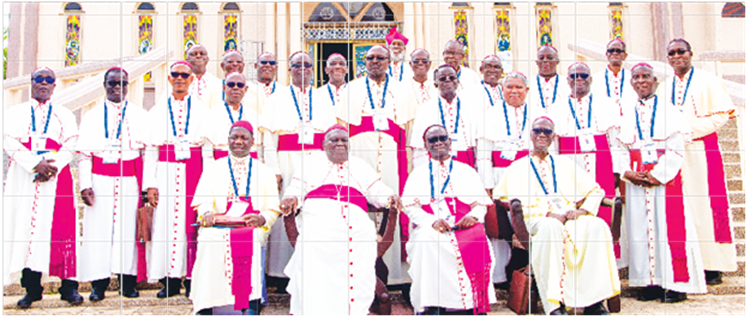
In response, the Ghana Catholic Bishops’ Conference (GCBC) has renewed its long-standing call for the government to return Catholic-founded Senior High Schools (SHSs) to Church oversight, stating that the time has come to restore a model of education that combines academic excellence with ethical formation.
This renewed call was captured in a communiqué issued following the Second National Catholic Education Forum held in Kumasi earlier this year. The GCBC, representing a network of over 5,400 basic schools, 82 SHSs, and dozens of TVET and tertiary institutions, emphasised that the Church’s commitment to holistic education has served Ghana for decades by producing disciplined, service-oriented citizens.
“We are witnessing disturbing trends in our schools. Indiscipline, disregard for authority, and loss of moral compass are becoming too common. The Church has a moral duty to act—and the State must work with us,” the Bishops warned.
Their message was echoed strongly by His Eminence Cardinal Peter Kodwo Appiah Turkson, Chancellor of the Pontifical Academies of Sciences and Social Sciences, who dismissed the idea of a Church–State conflict in education as a “falsity.”
“Mission schools were never exclusive. When all the big schools we had were Wesley Girls, Mfantsipim, St. Augustine’s, and Adisadel, was any non-Christian thrown out?” he asked in a recent interview on Channel One TV. “These institutions were built to serve the nation – not just the Church.”
Drawing parallels with Church-run hospitals – where State-paid personnel operate under Church management, Cardinal Turkson questioned why such partnership could not exist in schools.
“In hospitals, there is healthy collaboration. Why not in schools?” he queried. He attributed the current impasse to the weakening of Church-appointed managers by parallel administrative structures and over-centralised decision-making by regional directors.
Most Rev. Emmanuel Kofi Fianu, SVD, Vice-President of the GCBC and Bishop of Ho, represented the Catholic Church at the recent National Education Forum in Ho—after the Church was initially excluded from invitations. The omission sparked national outrage and led to a formal apology and a late invitation from government.
Speaking at the forum, Bishop Fianu decried the marginalisation of the Church in managing schools it helped establish and build. He called for the posting of Catholic teachers to Catholic schools, respect for Church properties, and proper consultation with Church leadership—especially on matters relating to school ethos and moral education.
“The erosion of Catholic identity, the spread of social vices, and the decline in moral instruction are direct consequences of sidelining the Church from its own institutions,” he said.
Support for the Bishops’ stance is growing. The USA chapter of the St. Augustine’s Past Students Union (APSU-USA) recently issued a statement urging government to “restore and reinforce” Church leadership in Catholic schools.
Veteran Catholic educationist, Sr. Evelyn Fiawoo, also underscored the transformative value of faith-based education: “The difference Catholic schools make lies not just in exam performance, but in how students carry themselves—with conscience, humility, and service.”
In their communiqué and public engagements, the Catholic Bishops have clarified that their advocacy is not about reclaiming power or limiting access. Rather, it is about restoring moral leadership and values-based formation in Ghana’s schools.
Catholic schools are inclusive, non-discriminatory, and committed to the national curriculum. What they offer in addition is the formation of conscience, character, and civic responsibility – a legacy now under threat.
The Catholic Standard strongly supports the call of the Catholic Bishops. The Church is not seeking control—it is offering partnership. The goal is not division but unity in values, purpose, and outcomes.
As Cardinal Turkson rightly noted, “The Church and State are not rivals—but long-standing allies in the shared task of nation-building.”
If Ghana is to rise, it must begin by reclaiming the soul of its schools. Let the Church help. Let values lead.