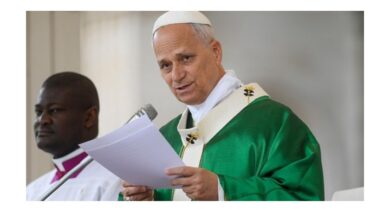
Peter Cardinal Appiah Turkson, Prefect of the Dicastery for Promoting Integral Human Development at the Vatican granted an interview to the Managing Editor of The Catholic Standard, Ben B. Assorow during his recent visit to Ghana.
We can improve our transportation because our Public Transportation system hardly exists. We do not have a Public Transportation system. The trotro may be referred to as a public transportation system but everybody knows what it is. We should think about Trams plying the streets of Accra, Kumasi, Cape Coast and other big cities. Why can Tram not be activated to move people readily?
It is not an attempt to take jobs from taxi drivers but it is simply to make our population more movable and also reduce the cost of polluting the environment.
At COP 21 in France, we were fighting to reduce carbon emissions to 1.5 percent. These emissions come from vehicles on the road and in our case vehicles which are second-hand and third-hand with poor engine conditions and burn fuel poorly and so we pollute a lot more and it will be good if we spend less time on the road, shorter distances and pollute less with our vehicles. That is why the suggestion of Tram is commendable.
Question: Any comment on the Church in Africa?
The Church in Africa needs to spearhead the project of the growth and Integral Human Development of our people. This is what evangelisation is all about. Integral Human Development of our people may not only be limited to physical and economic because then it is not integral. Integral development involves the body, spirit, material, economic etc together and is the task of the Church to spearhead all of this.
Here in Ghana recently, you celebrated the Eucharistic Congress. That followed another national event – dedicating Ghana to the Sacred Heart of Jesus. It just meant that for Christians and Catholics in Ghana, you wanted to place the Gospel message as the key directive compass of your system of development and if that were to succeed, the issue of corruption, promiscuity, prostitution and teenage pregnancy can be considered newly and most importantly that we commit ourselves to promoting people’s better well-being.
That is what Integral Human Development is all about. Incidentally this happens to be my task. My office in the Vatican is to promote this. I happen to head an office that is called the Dicastery for Promoting Integral Human Development, our task is to promote this and our allieds are the local Churches. Churches have the biggest task of making this real and possible in societies.
Integral human development is to ensure the flourishing of people. It is what God created us to be. To flourish in His dignity and that is what we need to do guided by the terms of the Gospel to learn to respect, exercise justice and through justice live in harmony and peace and see how we can support our own lives with the resources of the earth respecting the principle of the universal destination of the goods of the earth. The goods of the earth were not created to enrich a few, they were created to satisfy the needs of all of us.
Where there is a concentration creating a situation of inequality, equity, it is up to us led by Gospel message to see how we can correct that.
Question: As a member of Symposium of Episcopal Conferences of Africa and Madagascar (SECAM), what message do you have for Bishops of Africa as the Church prepares to celebrate SECAM’s 50th Anniversary?
On the Golden Jubilee of SECAM, 50th Anniversary is always a time to celebrate and to revisit the original reason for any Institution to see the shortcomings and improve upon them and how you can re-programme to achieve its aims and goals.
One crucial thing that several Catholic Churches and Organisations are not used to is strategic planning. When you fail to plan, you plan to fail. We need to do strategic planning, survey the situation and horizon to see where our challenges and resources are and how we can help because the Kingdom of Heaven must be spread by us. There is no reason saying we do not have the resources to do it. It is the question of planning and seeing our resources and how we can use them to further our purposes.
SECAM is an Association that brings together all the Bishops Conferences of Africa. All the Bishops can come together and recognize how with their co-ordinated and concerted efforts, they can help transform this Continent. Pope Benedict challenged Africans when he travelled to Angola to present the Intrumentalis Laboris of the last African Synod Heads of State that they can transform the continent and make life livable for the people of the Continent for upright conduct.
It is up to the Church to take up the message of the Pope and make it real and livable and something that can be implemented. Fifty years of SECAM are years of trying to ask what we have done to this Continent and how has the Church promoted Integral Human Development of the people of the Continent. So there is a lot of self-examination and interrogation to do. It must encourage us to rebrand and see what we can do.