Tragedies of all kinds have dragged themselves into the forum of public discourse. The reasons are: the rate of them and dawning suspicion that [a] some things must be going seriously wrong; and [b] the concerns which the alarm raises as the accidents pile up. I had closed a column elsewhere recently on the final statement of an old ballad—”Where have all the Flowers gone?” where the minstrel signs off? “when will they ever learn…when will they ever learn”?
The verdict that the public closes prognostications which ensue, always end up nothing concretely done except simply labeling: the road accidents as “senseless” and the others in the mishaps as “unfortunate.” A third line of thought dumps both into the usual political football-quagmire.
Tragedies
And that loses making real sense of the disasters and matters that arise to address for resolutions that would forestall repetitions, confirming a nation having been not less than probably appears not to learn anything at all collectively; but engage in accusations. This custom of mostly loud verbal passing the buck, remarkably par excellence, rebukes all for each of the cluster— road deaths becoming epidemic, suicides a fashion and tree falls, blamed on nature.
Any cursory research will disclose that none of the three is without precedents and the statistics of frequency and death tolls, unquantifiable lost properties and huge damage costs would total on indictment, a sentence for life in hard labour, were they one person’s negligence.
Resolution approach
Whether the sparked political rows are the solution is also now clearly realized to be uncalled. There has usually followed the benevolent government’s pledge to “support” victims etc.
No one talks beyond and no one finds out if the promises were honoured. It is a sad detail from benefits of hindsight. Again the post-calamity Reports are either hardly published or followed through. This is the other side of the same coin.
Results?: faults are not corrected, default are not sanctioned and the next disaster occurs, the prior one slipped into only a reference point. That makes the standard profile of country reaction to disaster, as if it waits for them.
I remember a poignant newspaper caption which showed dead Gen. Johnson Aguyi Ironsi, the Officer who headed the country after the first “Three-Majors’-Coup” in Nigeria [15 Jan 1966] killed in the counter that brought Lt-Col Yakubu Gowon to power and finally the civil war. The caption was “A Country That Kills Its Sons.”
The recent on-goings here –roads, water, fire and natural, cannot be far from unrelated picturesquely and or indeed painfully comparable with that epitaph.
It has been necessary for me to lead with the survey this far as aide memoire that enables appreciating where and how it arrived at this juncture. All difficulties are sorted out into modicum of resolution through ideas. But ideas are not formed in a vacuum; and the framework that resolves the problem(s) is a collective wisdom called consensus.
The first absentee when trouble strikes here is the determined shut down of general agreement for a way forward, even if that is ad hoc because only a political group of day abrogates all the wisdom. The caprice’s by-product is what turns up in politicized sparked furious rows. These divert the essence of groping towards solutions to inform policy that provides for the future if not able to forestall the next time.
At the least, there would exist mechanisms for avoidance or mitigating impacts, a pre-empting which had been overlooked throughout into compromised. In a very narrow sense, a natural cause which happened against all the odds shall be acceptable with regrets for lack of ability in all things and ways to stop it when that overwhelms.
It is happening now in the aftermath of the “Waterfalls” tragedy. The better outcome and public expectation is not a stage-managed enquiry but rather a strenuous exercise to reinforce pre-emption including re-builds and re-done guidelines and regulations which bind responsibles and users in spelt out punishment, enforceable with swift precision and above all without let or hindrance, as comme d’habitude here hitherto.
Question: who institutes all that? By force of circumstances per the continuum of accidents, weather vagaries and others including suicides which was never in the reckoning [outside of psychiatry and ilk] till today, “Waterfall-gate” has exposed the cry in the wilderness by some that certain items should be ostracized by politics and logged into the national basket for collective thinking and actions prescribed. It is time. This is our national “Lesson-Two”.
The extraction has a wider socio-constitutional implication. On the one hand, the mentality strongly maintains government of the day must bear it. On the contrary it is evident that the time has passed and that credo reigns because there has been a stifling national collective thinking ability and that property has been hi-jacked by partisan politics.
Consensus
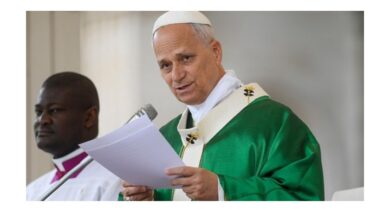
Therefore instead of government it is going to be difficult to do anything like repair-damage outside of government. Thus, there would have to be a constitutional tinkering to make this novel status quo, if the politics –government/opposition will concur to step aside but participate to create it. What or who breaks the stalemate?. On the “who” side, the Church is the best candidate. They are in on the controversial “National Cathedral” construction. However, its absolute qualification to trust to breach or be tasked has an odour of seamless chuckles and beaucoup “hmnnnn….”. It might be massaged into public let go; well lets call home Peter Cardinal Appiah-Turkson from Rome.
I doubt the Holy Father [Pope Francis] will deny a brief grant him away out of the Vatican. However, I believe the bigger issue is that conferencing must be initiated; but by who?. I think there is room for the State, the Church and People to dialogue a rapprochement to settle the ‘who-does-what,’ borrowing organized Labor parlance. “What” represents the groundswell of the dissent of the group euphemistically described as the “silent majority.”
Solution
Country-wide simmering disquiet can be placated through the dialogue formula, I suggest. Our Peter Cardinal can broker it. It will be the nicest present from the Holy See on top of the re-consecration for birthday. I also feel it would stand out and to the test of time as the Roman Catholic Church’s achievement-contribution to this country since the “White Fathers” et al during 120 years missionarying here.
I am aware the Vatican urgently needs a Cardinal Richelieu [1585-1642 Fr. Cardinal Statesman] presently. However, in our predicament of haplessness to exit a situation of caught between senselessness and finding reasonability, we won’t begrudge ourselves the full range of all assets to kill our frictions, petty squabbles and raucous.
This was also whispered but sounded quite authentic because my memory not totally faded on that recalls the Archbishop personally denied or through a Spokesman Priest at the Archbishops’ Court sandwiched between OLA and St Augustine’s College in Cape Coast. The matter was closed. Finally, there is stark difference between a peace negotiator and a Political Minister. If it came to that Fr Aristide of Haiti might also careless be thrown into the argument as example; but he de-cassocked before he entered politics to become Head of State; and there was Archbishop Makarios of Cyprus long before. His was Greek Orthodox not strictly Roman Catholic.